
On this page
- How dropshipping works in simple language
- How to find dropshipping product ideas for free
- How to research if a product is actually worth testing
- How to test products with small ad budgets
- How to create AI dropshipping videos when you hate filming
- Concrete ad ideas you can build with OneStudio
- Wrap up and next steps for your first product
If you are new to dropshipping it can feel like everyone else already has secret winning products and magic ad formulas. The good news is you do not need a course or an expensive spy tool to get started. You need a simple system to find products, basic research skills, and a way to pump out a lot of ad creatives fast using AI video tools like OneStudio.
This guide walks you through dropshipping for beginners step by step. You will learn how to use TikTok feeds, Amazon lists and competitor stores to find product ideas, how to research demand and profit, and how to turn those ideas into AI dropshipping videos without filming anything yourself.
How dropshipping works in simple language
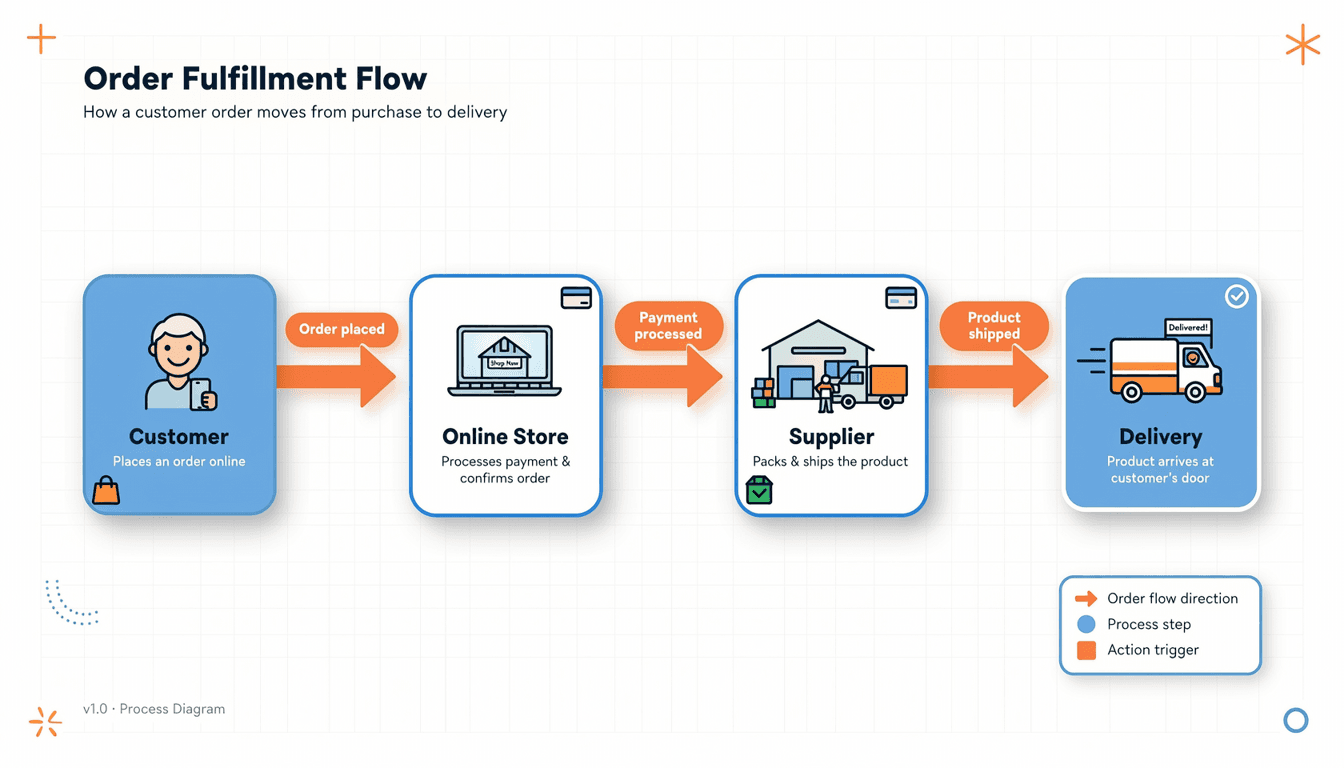
Dropshipping is just retail without inventory. A customer buys from your store, you forward the order to a supplier, and they ship it straight to the customer. Your job is not to invent products. Your job is to pick products that are already selling, present them better, and run ads that convert. That is why product research and creative testing matter more than fancy store design.
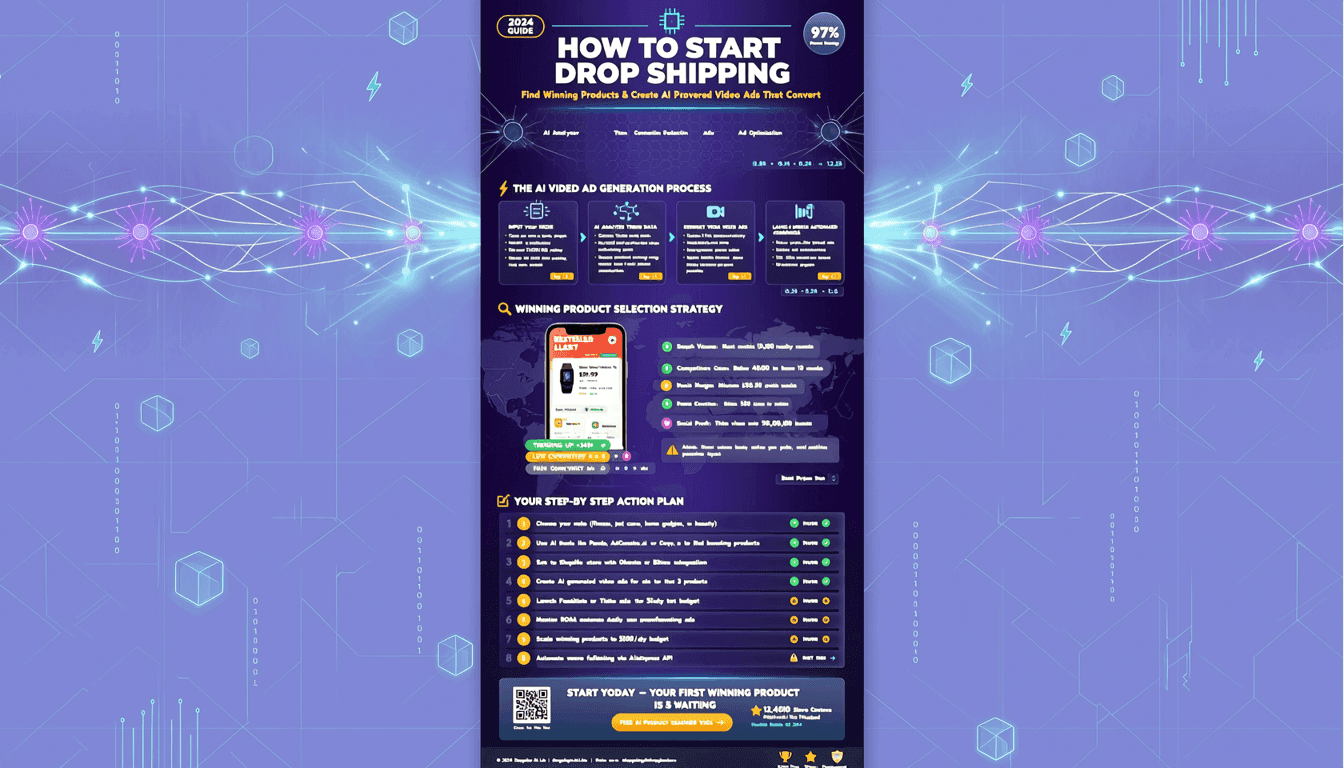
Most modern guides say you must find a “winning product” before anything else but then skip the actual details. Recent frameworks from tools like AliShopping break it down into clear steps that anyone can follow. They suggest sourcing 20 to 50 product ideas first then filtering by demand, competition, supplier quality and profit before you run ads [news.astools.app](https://news.astools.app/en/blog/how-to-do-product-research-for-dropshipping). The goal is not to guess one winner. It is to build a pipeline where losers get cut quickly and only the best products reach your ad budget.
If you focus on this pipeline mindset dropshipping becomes less about luck and more about running a repeatable process. You collect ideas every day, you filter them fast, and you only scale offers that prove themselves in small tests.
How to find dropshipping product ideas for free
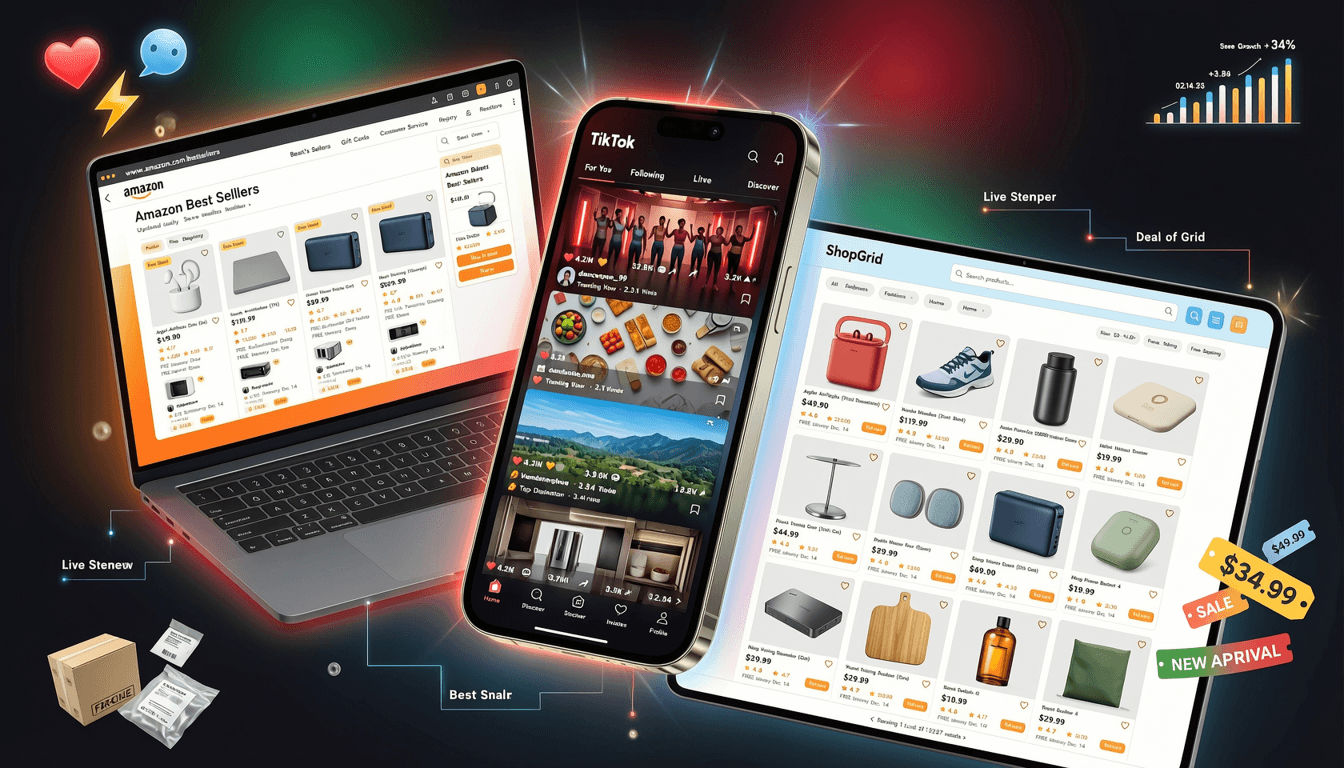
You do not need to pay for “winning product” lists to start. Most paid databases are actually one step late because by the time a product hits their list hundreds of people are already testing it [news.astools.app](https://news.astools.app/en/blog/how-to-do-product-research-for-dropshipping). Instead, you can build a free sourcing routine that surfaces products earlier. Think of it as your daily scan for ideas.
First is TikTok. Your For You Page is a goldmine if you train it. Search hashtags like #tiktokmademebuyit, #amazonfinds and #dropshippingproducts, then like and save product videos so the algorithm feeds you more. Many operators also follow TikTok accounts that post only viral products so their feed is constantly full of new ideas. Combine that with TikTok Creative Center and Facebook Ad Library to see what is being pushed hard in ads right now [trygodmode.com](https://www.trygodmode.com/blog/how-to-find-winning-products-2026).
Second is Amazon Movers and Shakers, a free page that shows products with the biggest sales rank jumps in the last 24 hours in each category [news.astools.app](https://news.astools.app/en/blog/how-to-do-product-research-for-dropshipping). If something is exploding there it is a clue that demand is strong. Third is competitor Shopify stores. Search your niche on Google or click links under TikTok viral videos and study their best seller collections. This three source combo can easily give you a list of 20 to 50 products to investigate without spending anything.
How to research if a product is actually worth testing

Once you have a list of product ideas the next step is to decide which ones are worth your time. Many beginners skip this and end up burning their first ad budget on hope. A structured filter saves you money. Recent guides suggest checking demand, competition, price history, supplier quality and profit in that order [news.astools.app](https://news.astools.app/en/blog/how-to-do-product-research-for-dropshipping).
Demand is first. If you source from AliExpress or similar platforms look at order count in the last six months. As a simple rule products with at least 1000 orders have proven demand, while over 5000 orders is strong but worth a closer look at competition. Under 500 orders is usually too early unless TikTok signals are crazy strong [news.astools.app](https://news.astools.app/en/blog/how-to-do-product-research-for-dropshipping). Next check competition. Search the product on AliExpress and count how many sellers have that exact item. If every seller on earth is pushing it you are late. Use Google Shopping and Facebook Ad Library as extra checks. If you see hundreds of active ads you might want to move on.
Then there is supplier and price stability. Look for sellers with at least a 4 point 7 rating, more than twelve months of history and fresh reviews that mention shipping speed. Price charts over the last 90 days should be stable or show short normal promos not fake permanent discounts [news.astools.app](https://news.astools.app/en/blog/how-to-do-product-research-for-dropshipping). Finally you do the basic math. Make sure your price leaves at least around forty percent gross margin before ads so there is room for paid traffic. All of this sounds heavy but once you run through the process a few times it becomes fast.
How to test products with small ad budgets
Even the best research does not guarantee a winner. The only thing that matters is how real customers respond when they see your offer. That is why experienced dropshippers run small tests before scaling. A common setup is three to five ad variants per product, each with different hooks or creatives, tested at ten to twenty dollars per day for three to five days [news.astools.app](https://news.astools.app/en/blog/how-to-do-product-research-for-dropshipping).
During this test you watch basic metrics. Cost per click should usually sit under around one dollar fifty in most general niches. Click through rate above one point five percent is a sign your hook and creative are not terrible. Return on ad spend above one on cold traffic means the product has potential and above one point five means it might be a scale candidate [news.astools.app](https://news.astools.app/en/blog/how-to-do-product-research-for-dropshipping). Anything that fails these soft thresholds gets cut. It is better to kill losing ideas quickly than to keep feeding them budget because you feel attached.
The tricky part is creative volume. Most beginners can only afford to shoot one or two ads but the people winning tests often run ten angles at once. That is where AI video comes in. If you can turn one product into ten different dropshipping videos without hiring creators or filming yourself you can finally escape the testing trap. The product research stack gets you good candidates. A solid creative system is what turns them into actual sales.
How to create AI dropshipping videos when you hate filming
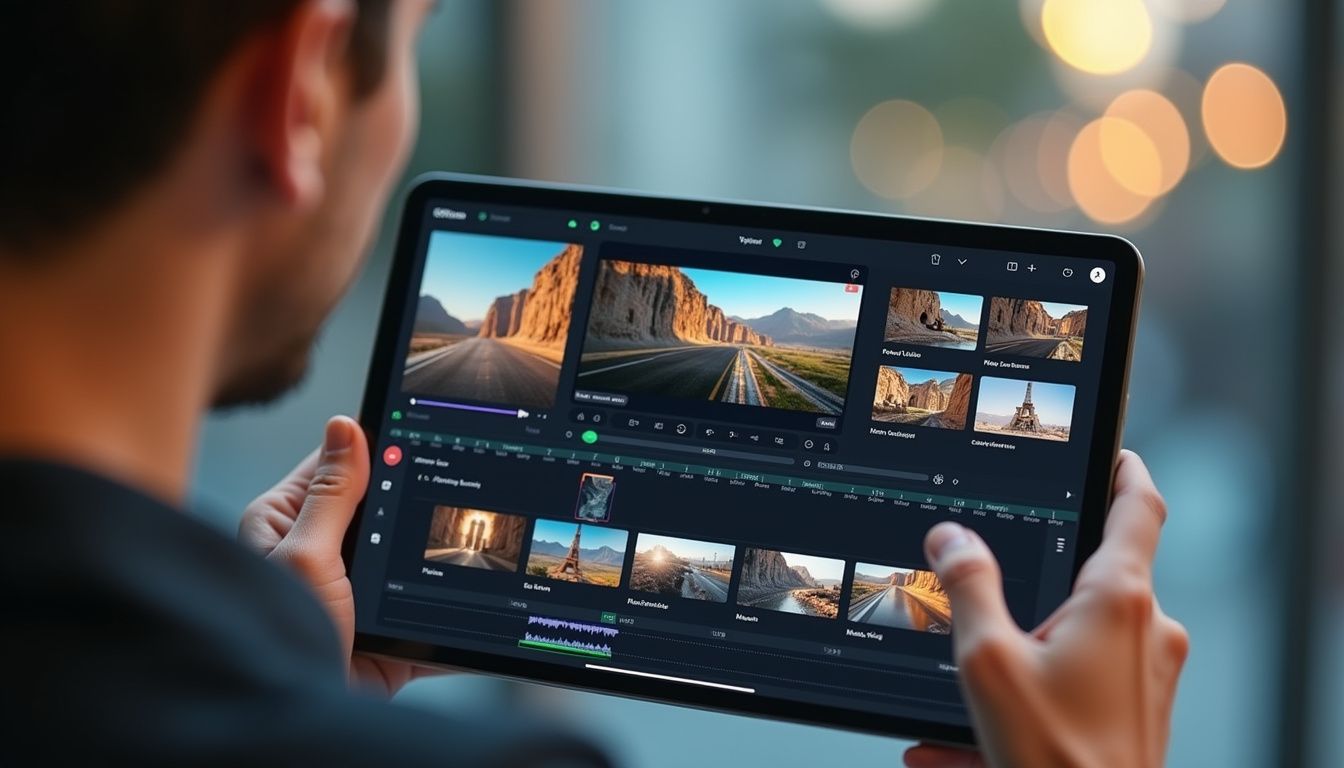
Maybe you do not want to be on camera or you simply do not have the time or budget to shoot a new ad every day. You are not alone. Many one person dropshippers and tiny agencies are in the same spot. This is where AI video tools like OneStudio can carry the heavy load. Instead of booking a studio or begging friends to film, you can generate full ad creatives straight from a product link.
With OneStudio you paste your product URL and the app pulls key details to build a script and storyboard. You can generate multiple AI dropshipping videos in one go with different hooks and angles so you are not stuck with just one concept. Under the hood OneStudio uses more than twenty models like Seedance, Kling and Flux. That means you can create everything from polished product shots to UGC style pieces with voiceover and lipsync. If you want to clone your own voice you can do that too, or you can pick from built in voices and languages without extra tools.
Because OneStudio also spits out different formats like nine by sixteen, one by one and sixteen by nine you can reuse the same idea across TikTok, Reels and even YouTube Shorts with almost no extra work. When you match a solid research process with this kind of creative volume you have a realistic shot at finding winners faster because you can finally test ten angles for the price of one.
Concrete ad ideas you can build with OneStudio
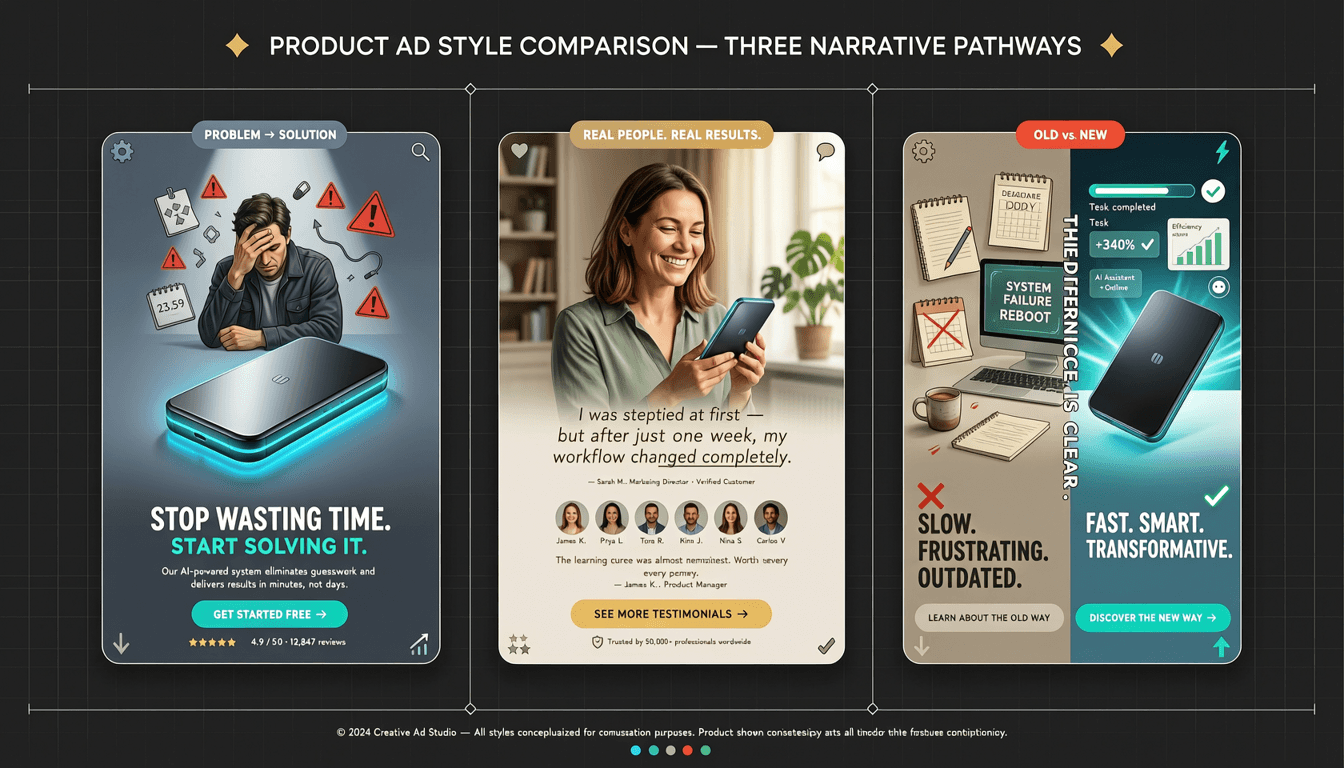
If you are not sure what to actually make with an AI video editor it helps to start with a simple list of ad formats. For most beginner dropshippers three types carry almost all of the weight. The first is the problem and solution demo. Show a quick pain point in the first three seconds and then show your product fixing it. Guides on finding winning products talk a lot about this visual demo rule where the product benefit makes sense in three seconds or less [trygodmode.com](https://www.trygodmode.com/blog/how-to-find-winning-products-2026). OneStudio can generate these demos from text prompts or product images so you do not need to film a full setup.
The second format is UGC style testimonials. Here you use AI voices or lipsync to simulate a customer style video talking about why they love the product. You can mix this with real customer reviews from your store to add proof. The third is comparison ads. Show before and after, or show your product next to a common alternative. Once you have the scripts you can spin out multiple variations by changing hooks, headlines and visuals inside OneStudio. For example you could test an urgent hook, a curiosity hook and a social proof hook across the same core story to see what hits.
Because OneStudio also supports image ads, captions and automatic sizing you can build an entire creative stack for a product in a night. Instead of stressing about one perfect ad, you can think like a media buyer and focus on iteration. When a certain angle works you scale it. When it flops you replace it with a new AI generated variant.
Wrap up and next steps for your first product

Dropshipping for beginners does not have to be a guessing game. You start by collecting product ideas from TikTok feeds, Amazon Movers and Shakers and competitor stores. Then you run them through a simple filter that checks demand, competition, price history, supplier quality and profit the same way experienced sourcers do it [news.astools.app](https://news.astools.app/en/blog/how-to-do-product-research-for-dropshipping). Finally you run small live tests and let the numbers decide what to keep instead of trusting your gut.
The missing piece for most new operators is creative volume. It is hard to win if you can only afford one or two ad creatives per product while others are testing ten. That is exactly the problem OneStudio is built to solve. With our AI video editor you can turn any product link into a batch of AI dropshipping videos and image ads, complete with different hooks, voices and formats. You get to focus on research and testing instead of filming. If you want to see how this feels in practice you can start on the free tier and then move up to paid plans from just nineteen point ninety nine euros per month. Check our pricing page or explore how we compare to other creative tools in our AdCreative.ai alternative guide, then ship your first AI powered product test today.